
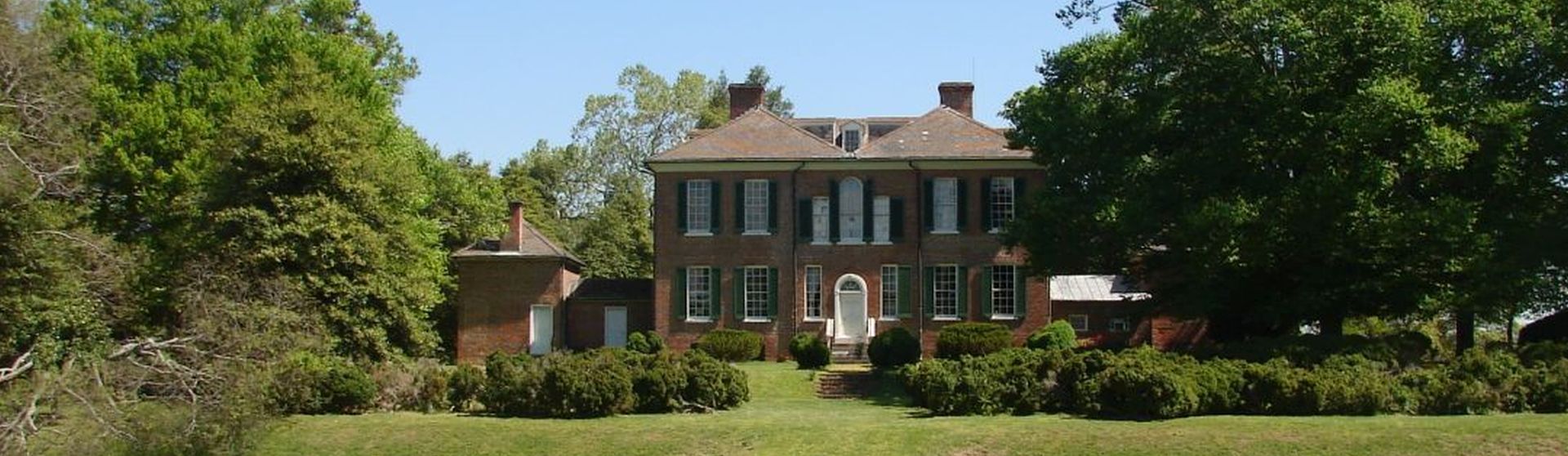
Taking Roots and Giving Care
The remedies or treatments created by slave healers were called "simples"
and were a part of the domestic practices of both black and white
women on southern plantations. Slave healers knew where to find plants
and herbs, understood which parts of the plants were useful, and knew
when to collect them. They understood the characteristics of a particular
plant and what it could be used to treat. They knew how to prepare
the teas, poultices, salves and balms.
Scholars have described the specialized knowledge these slave healers brought to the plantation environment and documented the oral traditions that enabled them to retain the knowledge within their communities and down through generations. Some of the most common treatments used by slave healers to treat ailments on plantations included the use of boneset, to create tonics to treat colds and fever and Life everlasting from which a tea was made to treat cramps, fevers, and use as a decongestant. Pokeroot was another plant used to help relieve pain, treat sores, and used as a laxative.
Scholars, such as Sharla Fett, Todd Savitt, and Sara Cotton have documented the absorption of black folk medicine into the medicinal practices of white physicians, without having the source of that knowledge attributed to slave healers. According to scholars, the origins of black folk medicine were forgotten, ignored, or attributed to the medicinal knowledge of white physicians of the times. The uses of medicinal plants by slave healers were also deleted from the historical record by the growth and dominance of medical societies, which did not recognize the contributions of African Americans to medical knowledge.
Slave healers were not allowed to publish books or journals, form medical societies, nor advertise their cures. Their treatments were spread simply by oral tradition or through the assistance and involvement of white physicians or planters.
The following is a list of links to more detailed information on the contributions of African-American healers prior to emancipation, along with information on roots and herbs they used to treat ailments.
Observations upon the Windward Coast of Africa
Overview
of Medicineal Plants
and Traditional Medicine in Africa
Working
Cures: Healing, Health and Power
on Southern Slave Plantations
by Sharla M. Fett
Medicine
and Slavery
Todd L. Savit
Bodies
of Knowledge: The Influence of Slaves
on the Antebellum Medical Community
by
Sara Mitchell Cotton
Virginia Polytechnic Institute and State University
African-Americans at HLK
Healing and the African Spirit
A Laying on of Hands
Taking Roots & Giving Care
It is Well with My Soul
Aloe
J.S. Peterson @ USDA-NRCS PLANTS Database
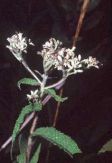
Boneset
Robert H. Mohlenbrock @ USDA-NRCS PLANTS Database / USDA SCS. 1989. Midwest wetland flora: Field office illustrated guide to plant species. Midwest National Technical Center, Lincoln, NE.
Elderberry
Robert H. Mohlenbrock @ USDA-NRCS PLANTS Database / USDA SCS. 1989. Midwest wetland flora: Field office illustrated guide to plant species. Midwest National Technical Center, Lincoln, NE.