A Message from the Director
The intersection of Woodyard
and Rosaryville Roads in Prince George´s County is an old road
with a rich history obscured by increasing development and daily residential
commuting. What is hidden by modern life is a history that is representative
of the American quest for both racial and religious freedom, It is international
in scope, profound in the telling, and touches on some of our most compelling
moments in American history.
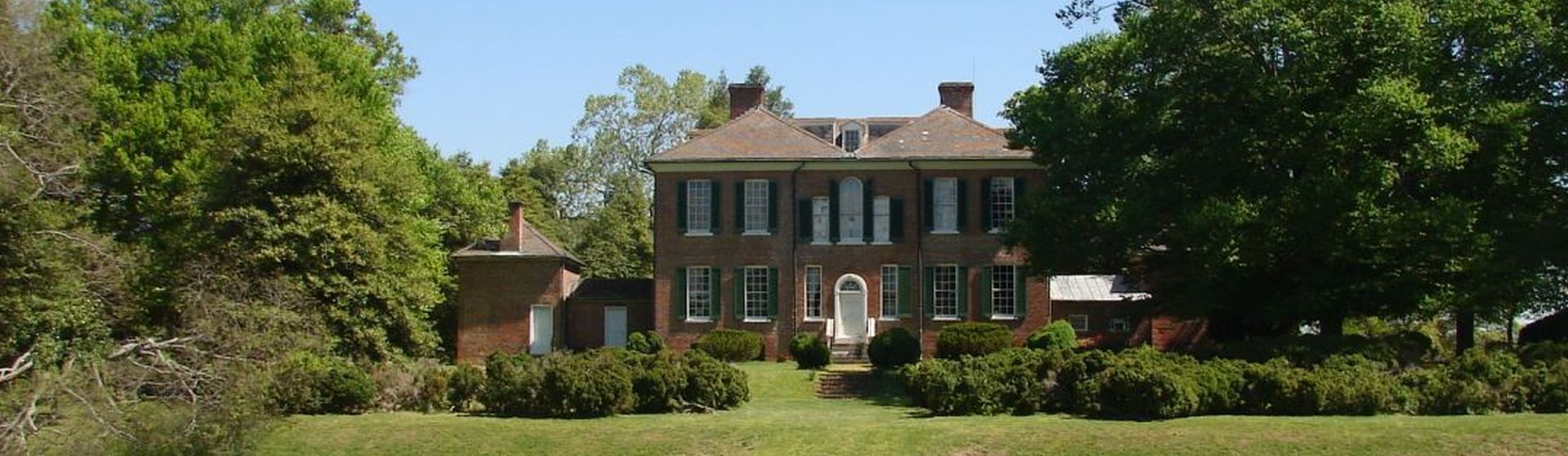
From the time of the Darnalls and Daingerfields, ownership of His Lordship´s Kindness included members of this nation´s diplomatic community, government officials, and prominent Washington area professionals. Each family has contributed something of their own lives to this house.
Rachel Cameron Hale purchased this house in the 1930s, installing heating
and electrical systems, and plumbing.
In
the 1940s, Thomas and Caroline Dunham cooked their meals in the original
kitchen, they installed a fountain and a brick-lined swimming pool on
the garden side of the house, and Caroline Dunham also ran a tea
room’ in the old slave infirmary, until gas rationing’
discouraged her city customers from traveling to this rural enclave.
In 1946, David Bruce, a prominent diplomat, purchased the property, but sold it in 1950 to Royd Sayers a retired Georgetown physician, and his wife Edna Sayers. In 1954, the Archdiocese of Washington purchased the property on which they established Resurrection Cemetery on 100 acres. The remaining 136 acres were sold to John and Sara Walton.
The Waltons were the last family that made their home at Poplar Hill and it was this family that created the Foundation and put the mechanisms in place to open up this 220-year-old house to the public as a historic house museum.
Reflective of this nation´s history, perhaps the most compelling story has been the relationships between the Darnall family and their descendants and the African-American families that labored, lived and worked at Poplar Hill both in slavery and after emancipation.
I914, the Washington Times newspaper carried a story about haunts’ at Poplar Hill. The reporter interviewed Louis Brown, one the remaining descendants of the black families that lived at Poplar Hill. In the story, the writer reports:
The authority on the haunts’ and also on the stirring days that have passed at Poplar Hill’ is old Uncle Louis, born there some ninety odd years ago, and living still in the quarters’ where he has passed his entire life.’
He
is a character and a mine of reminiscences. He´ll tell of the
warring days of Ole Marse’ Robert Sewell, when the squire
was apt to ride his horse through the great hall, when the blades of
the country-side gathered for carouse and high play, and when one night,
the master was only prevented by force, by the help of a friend and
the servants, from gambling away his broad acres. He´ll tell you
of the quieter days when Miss Ellen’ lived at Poplar Hill
and her crowd of nephews haunted the place for the hunting and shooting.
Then he´ll branch off to reminiscences of what his Dad had to
tell of the time when the British marched through the county and there
was a rush to hide the family silver."
Uncle Louis’ son of Henry and Patsy Brown lived and worked at Poplar Hill on His Lordship´s Kindness, both in slavery and in freedom. They were members of St. John´s Catholic community on old Branch Avenue when it was still a mission church and during Reconstruction they provided the leadership in the establishment of the first school for African-Americans in Clinton.
We view Poplar Hill on His Lordship´s Kindness as an institution within a community that reflects the human spirit and the history of nation within the telling of stories about families both black and white from the late 17th century through the time of 20th century.
Now in a time of change, His Lordship´s Kindness offers the community place to visit, to appreciate and to understand the past, and the opportunity to pass on our collective memory and experiences to future generations.
It is within that spirit, that along with the National Museums Liverpool, in England, we too commemorate the 2007 bicentenary of the abolition of the British slave trade.
A narrow path leads to the beginning of the site of the former slave quarters, which no longe exist.
This original 19th century brick infirmary would have served as a "hospital" or place where the medical needs of the African-American population would have been treated.
Louis Brown, a former slave who remained on the plantation after emancipation, worked as a gardener at Poplar Hill. We don't know much about his life, but on July 28th, 1914, it was his words that described the life and times at this plantation in an article for the Washington Times Newspaper.
The history of "Colored School No.1" founded by many of the African-American families from Poplar Hill.