The Birth of a Restaurant

by Ted Dunham


To understand how the restaurant at His Lordship's Kindness came to be it is important to know something of the owner, Elizabeth C. Dunham. As a young woman, Elizabeth was very attached to her mother Clara Guthrie Cocke and when Clara, after divorcing her first husband Philip Cocke, married a Swiss businessman, Ludovic d'Arcis, it was natural for Elizabeth to move to Switzerland to be with her mother.
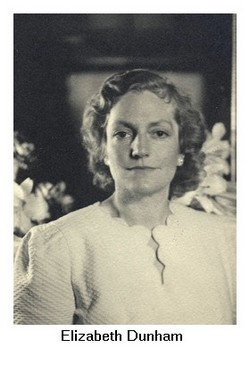
Elizabeth had no problem adapting to life in Switzerland as a teen-ager. Her mother taught her all the social skills she needed to navigate in Swiss society and instilled in her a love of gourmet cooking to be regarded as an essential tool for a girl looking for a husband.

Life in Switzerland was affluent and easy. Baron d'Arcis was the General Motors distributor for Switzerland and had built a flourishing business selling Cadillac, Buick and Chevrolet cars, Frigidaire appliances, Delco and other products made by GM. This was in the early days of the automotive industry. General Motors had been in business for only about fifteen years and understood very little about business outside of the continental U.S. and so used the expertise of their distributors to be successful until they were savvy enough about doing business in strange (to them) cultures to set up their own subsidiaries. Will Durant who ran GM at the time felt he needed a base in Europe and was thinking of buying Adam Opel in Germany and Vauxhall in Great Britain. Distributors were king in those days and Ludovic d'Arcis was considered one of the most valuable. He was also admired for his cultured demeanor and fastidious business dealings. It was also said that his table was fit for a king. No one ever refused an invitation to dinner at the d'Arcis home, "Les Trois Ailes", in Versoix on the outskirts of Geneva. That was because his wife, Clara Guthrie, ran her house, as she did everything else in her life, with an iron hand and a fine appreciation for culinary excellence. As a result, Ludovic d'Arcis was on a first name basis with many of the top executives at GM like Harley Earl, Harlow Curtis, and even Alfred P. Sloan, who was said to have openly remarked that Clara's cuisine was worth at least five Michelin stars.

Clara Guthrie d'Arcis had arrived in Switzerland from her native Louisiana as a business woman. Through her grandmother she had been in contact with the American feminist movement in Louisiana, and in Geneva set out to organize "The World Union of Women for International Peace" with some thirty-six women from various countries in Europe. She was vociferous in her beliefs and worked ardently for women's rights and world peace. Needless to say, she was someone to be reckoned with, a "take-charge and damn the torpedoes" attitude that endeared her to Ludovic d'Arcis, who married her in 1916.

As a teen-ager, Elizabeth did not share her mother's vision of the future, but admired her mother's ability to get things done and took her counsel to heart.

Life in those days was full of activity, social pressures, entertainment at home and dinners and soirees in the diplomatic circles of Geneva. To get some breathing space, it was understood that the monthly pilgrimage by motorcar to Talloires in France, some 55 kilometers over the border, to dine at the Auberge du Père Bise on a Sunday, was sacrosanct.

On a sunny day in May 1917, when summer was felt in the air, the family set out in a Cadillac Phaeton for the clear waters of the Lac d'Annecy and the Auberge du Père Bise.
 
The owners Marie and François Bise came out onto the driveway to greet their good friends as they got out of the car and ushered them into the foyer with excessive care and consideration. Clara could sense that something was wrong and demanded to know what the problem was. It was François who explained that the kitchen was a disaster area, that the "Saucier" and two sous-chefs had not shown up for work due to an accident of some sort and they were very short-handed and everything was dangerously backed up. Ludo, his equanimity fading as he realized that his greatly anticipated gourmet adventure was in the process of being destroyed, put on a smile and asked what they could do to help. Clara took François by the arm as she took off her coat and rolled up her sleeves with a glint in her eye and said. "Come on, François there's work to be done!" François was embarassed that his good friend the baroness would even think of working in the kitchen, much less get her hands dirty, but the dire straights he was in compelled him to smile and show Clara to the kitchen.

What transpired in the kitchen is lost in time, but the results were clear. The large Sunday crowd was not aware of the commotions and dined as they expected to, although some might have wondered about the worried looks of the wait staff in their starched aprons as they went about their duties with the utmost professionalism.

After the luncheon crowd had departed and the setups for dinner were being made by the staff, François and Marie sat with their friends the d'Arcis, not knowing how to thank Clara for her prodigious help that day. François cleared his throat.

"Mes chers amis, I cannot think of a way to repay you for this extraordinary service you have given Marie and me. I know how you have always loved our Poularde de Bresse Braisée à la Crème d'Estragon and I want to give you the recipe which has been a closely guarded secret in our family for generations as a token of our gratitude".

Clara and Ludo understood the magnitude of the gift they had just received and were mute with gratitude.

As time went on Clara learned the intricacies of the recipe and perfected its execution, which she passed on to Elizabeth. The key to this recipe is in the ingredients. If they are not perfect, the dish loses its excellence. As well the cooking times and temperatures impact on the result. Here is the recipe: (click this link)


Elizabeth eventually moved back to the U.S. in the early twenties and lived there for a number of years and eventually married Thomas Dunham and raised a family, but with the depression coming on, in 1929 they decided to settle in Switzerland where Tom would take a position with Ludo d'Arcis' firm, The Agence Americaine. Life was on an even keel for ten years, but in the late thirties, as the clouds of war gathered and Hitler's threatening behavior alarmed everyone, they began preparations to return to America. In April 1939 the family boarded the American Export Lines ship SS Exachorda in Marseille and sailed for New York.

The big challenge was to find a suitable place to live. Tom was on active duty in the Navy Civil Engineer Corps, which would be known as the "SeaBees", stationed in Washington DC. They initially stayed at one of the family estates on the James River near Richmond, known as Lower Bremo. One of three estates, including Upper Bremo, Bremo Recess and Lower Bremo, which had been in the family since their original acquisition in the eighteenth century, Lower Bremo, while comfortable and conveniently available was not suitable for the family's purpose since it was too far from Tom's posting in Washington.

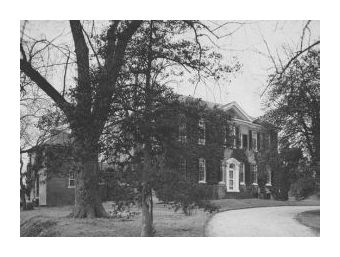
Elizabeth, through contacts, discovered that His Lordship's Kindness was for sale and proceeded to make arrangements to visit it. As soon as they saw the property Tom and Elizabeth fell in love with it and decided to buy it from the owner Mrs. Chandler Hale. In the summer of 1940 the Dunham family moved to his Lordship's Kindness and were once again able to enjoy their priceless antique furniture collection, books, art and other possessions which had been in storage since their arrival in America. Elizabeth realized her responsibility towards her magnificent purchase, which had never been open to the public and decided to have it included on the Garden Tour, and open it to the public on a limited basis. A natural extension of having visitors view the remarkable estate was to provide them with refreshments while there. There was an outbuilding known as the slave hospital that would make an ideal location for a tearoom or restaurant and so guests were offered tea and coffee and fresh baked bread and pastries.
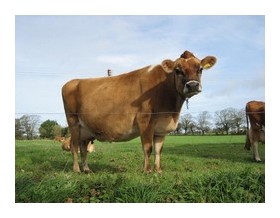
It soon became clear that more substantive fare would be appreciated by the guests and soon the tea was supplemented by simple but excellent lunches and dinners. Elizabeth developed the menu as she went along, and served food that the guests raved about. Vegetables were grown in the vegetable garden fertilized with natural manure, the three Jersey and two Guernsey cows provided the rich milk and cream, which was churned on the estate in the milk shed near the door to the kitchen and turned into butter, cream, buttermilk and whole milk. The Jersey cows produced milk with the highest possible butterfat content. Chickens were raised and veal, pork and lamb was also available from the farming operation. Hams and bacon were smoked in the smokehouse, between the main house and the restaurant.

When Elizabeth decided to introduce Poulet Talloires on the menu there were problems to solve. While the cream available was perfect for the recipe, there was a serious problem with the availability of the plump Poulet de Bresse, without which the recipe would be a disaster. Tom, through his government contacts put Liz in contact with the Agriculture Department's Extension Service in Cheltenham, MD, just down the road from HLK. That was the beginning of a close relationship that provided not only a capon every bit as good as the poulet de Bresse, but introduced HLK to contour farming, crop rotation and other then new techniques for improving agricultural yields.

Poulet Talloires was an immediate hit and the tearoom/restaurant became a minor sensation with the Washington crowd of diplomats, legislators and society mavens, who were always looking for new and interesting venues. Word got around and the workload mounted on Elizabeth to stay ahead of the game. She worked tirelessly, but was in her element, making famous and not so famous people comfortable in the pleasant surroundings of the elegant estate.

The restaurant flourished for a considerable time. However, after Pearl Harbor rationing of commodities and food items began and gasoline became harder to come by. This began to affect the ability of even the well-to-do to drive out to His Lordship's Kindness for a pleasant meal and eventually Elizabeth decided that it was no longer viable to keep the restaurant open. Besides, she was exhausted from the intense effort to provide her customers with an outstanding culinary experience. But she had the memories and they sustained her as the war became more alarming and morale in the capital fell to an all time low.
The family, however, continued to be rewarded with the fruits of her labors and often dined on Poulet Talloires, preceded by a half a grapefruit lightly broiled with brown sugar and a fresh strawberry in the center, Truite Amandine, Éscalope de Veau la crème and other culinary treats that Elizabeth so enjoyed making. After all, most of the ingredients were produced at home and not subject to rationing.